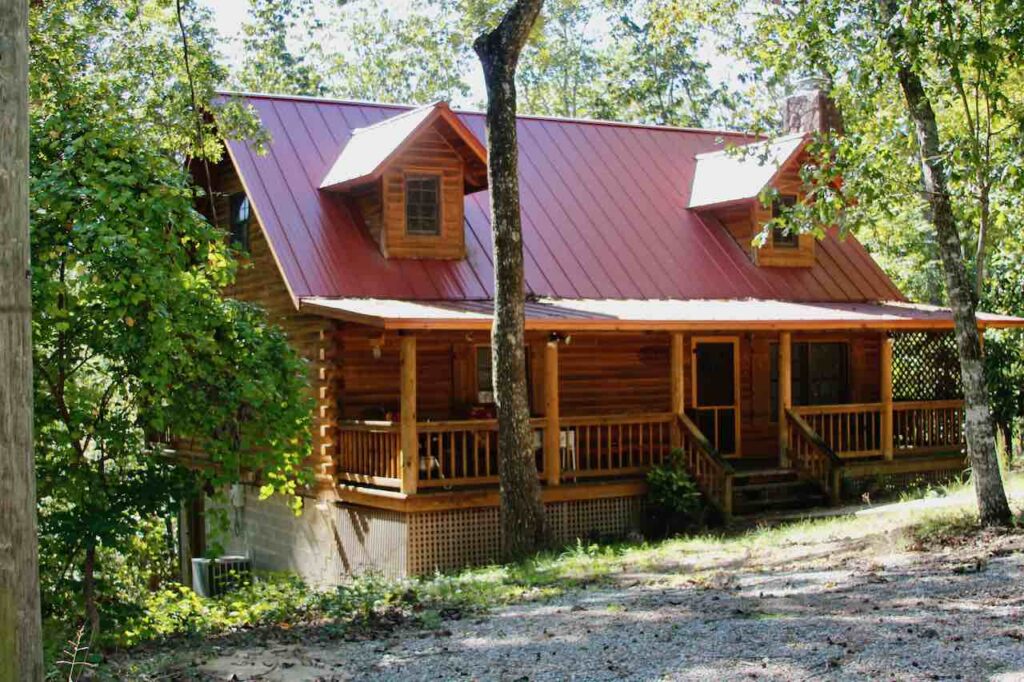
Immerse yourself in a living classroom. Sleep inside authentic 1930s stone masonry and wake up early for a guided historical hike. When you stay overnight in a historic CCC cabin, you aren’t just visiting the park’s past—you’re living inside it.
1930s CCC Architectural Field Guide
During the Great Depression, young men in the Civilian Conservation Corps (CCC) transformed native stone and heavy pine timber into lasting civic art across F.D. Roosevelt State Park. Key historic structures to examine include:
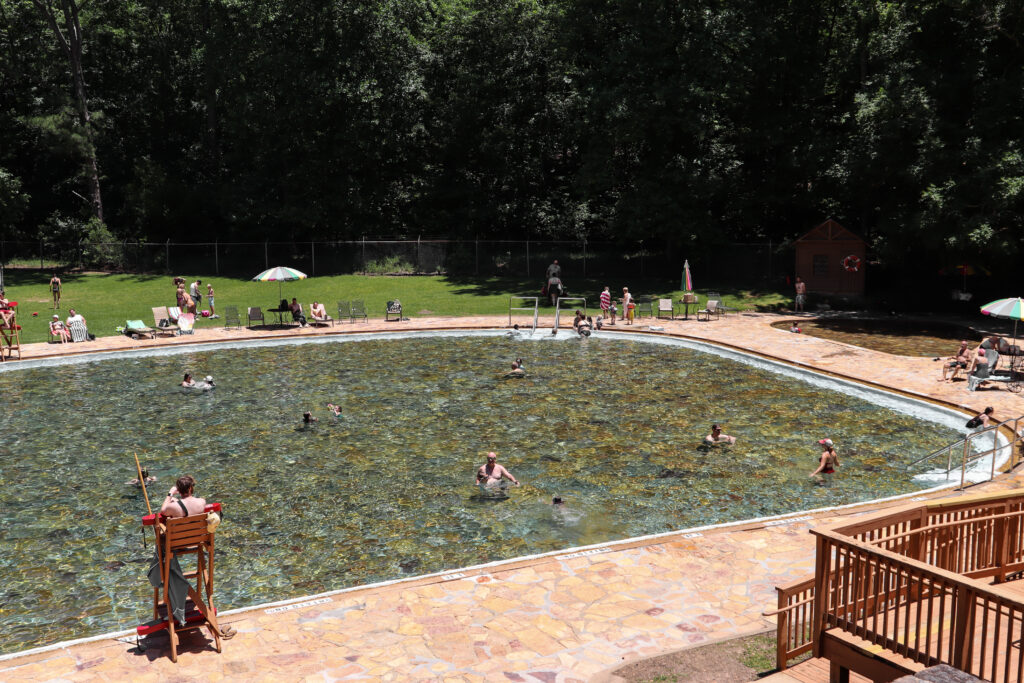
The Liberty Bell Swimming Pool: Completed in 1942, this spring-fed pool was hand-carved from native stone quarried right in the park.
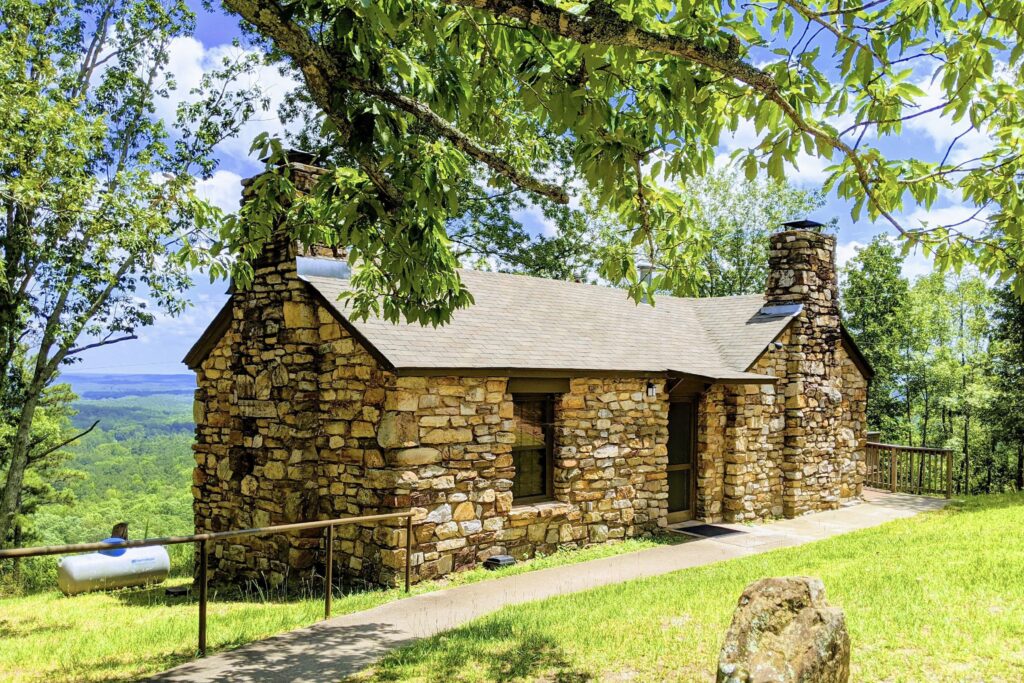
Stone Cabins & Overlook Shelters: Perched along the ridge, the park’s stone cottages feature massive hand-laid fireplaces, native oak beam timbering, and hand-chiseled masonry built to blend into the surrounding landscape.
Stone Water Towers & Bridges: As you traverse Highway 190, look for hand-built stone culverts, stone dam spillways, and historic water towers that anchored early park infrastructure.
Walking in FDR’s Footsteps
President Franklin D. Roosevelt played a direct personal role in developing the park and selecting its key scenic points:
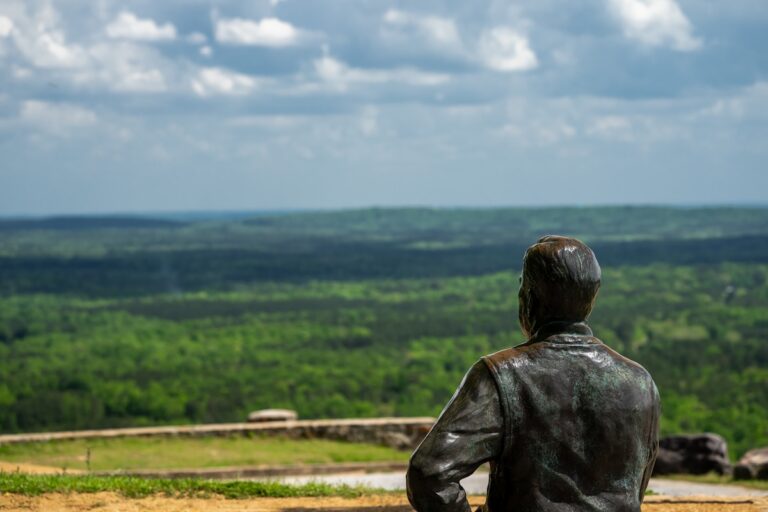
Dowdell’s Knob Overlook: FDR’s favorite retreat for private reflection and outdoor lunches. Today, a life-sized bronze sculpture sits at the edge of the stone overlook where the President pondered national decisions during the 1930s and ’40s.
Historic Warm Springs Proximity: Located just across the county line, Roosevelt’s Little White House Historic Site offers context on why FDR first traveled to West Georgia in 1924 to seek relief in the naturally warm mineral springs.
Geology & Native Habitat
Pine Mountain represents a unique ecological phenomenon—the southernmost mountainous ridge in the eastern United States.
Montane Longleaf Pine Ecosystem: The rocky, high-elevation ridges create microclimates that support rare montane longleaf pines alongside hardwood forests, mountain laurel, and wild orchids.
Birding & Wildlife Observation: The elevation shifts and forested stream corridors provide critical habitat for migrating songbirds, pileated woodpeckers, native salamanders, and white-tailed deer.
Historic Self-Guided Tour Route
Map out a full day of heritage exploration across the county:
Stop 1: FDR State Park & CCC Cabins — Inspect the original 1930s stonework and visit the park trading post.
Stop 2: Dowdell’s Knob & Overlook Marker — Take in sweeping views across the Pine Mountain Valley.
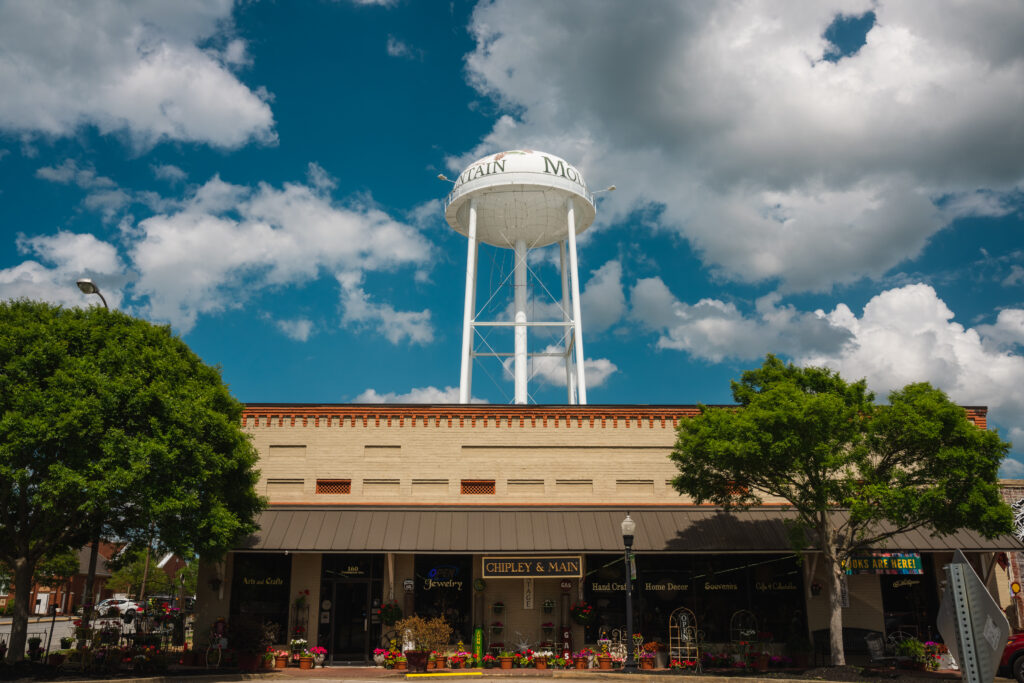
Stop 3: Historic Downtown Pine Mountain — Visit local historical exhibits and antique storefronts along Main Street.
Stop 4: Hamilton Historic Square — Explore classic 19th-century county architecture around the courthouse square.
Stop 5: Waverly Hall — Wrap up with a scenic drive down south county historic thoroughfares line with historic homesteads.